



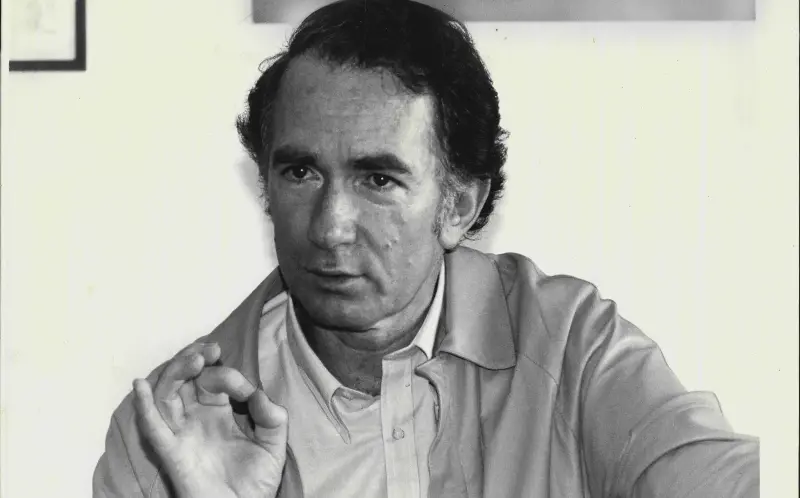
Geoffrey Chard, who has died aged 96, was a rich-voiced Australian bass-baritone who was once described as being to opera what Greg Chappell, the country’s great all-rounder, was to Australian cricket. Widowed after only three years of marriage, he came to Britain with his young son, building a career from scratch at Welsh National Opera, Glyndebourne and eventually Sadler’s Wells Opera (later English National Opera), where in 1963 he became a principal baritone.
The title role in Mozart’s Don Giovanni was his calling card, his gaunt, dashing shape dominating the London Coliseum stage on countless evenings. “His portrayal may be conventional in that he presents a devil-may-care, seductive hero, but Mr Chard does the orthodox superbly and his voice has the ideal, velvety baritone quality that the role calls for,” wrote the critic Alan Blyth after his appearance in April 1970, with the statuesque figure of Rita Hunter as a dominating Anna. The following year a Daily Telegraph critic was impressed by the “menacing undertones” of his Count in Mozart’s The Marriage of Figaro.
While many of Chard’s appearances were in Mozart operas or earlier works by Gluck and Handel, he was no stranger to contemporary music. Another Telegraph critic recorded that he gave the “finest singing of the evening” as the Choregos in the much-delayed first performance of Harrison Birtwistle’s Punch and Judy at Aldeburgh in June 1968. He was also heard in the world premiere of Malcolm Williamson’s Strindberg adaptation The Growing Castle and was a rich and expressive Peter in Williamson’s children’s opera Lucky Peter’s Journey at the London Coliseum in December 1969.
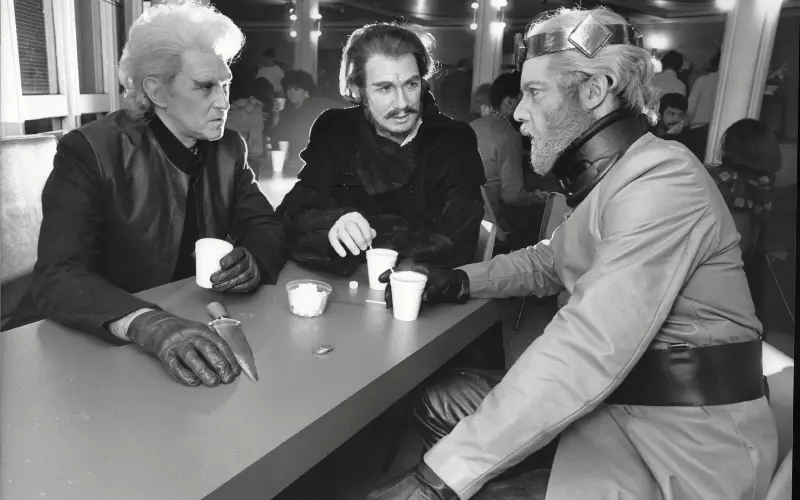
In his homeland he was magnificent as the obsessed and possessed Voss in Richard Meale’s adaptation of Patrick White’s novel, an opera by Australians about Australia which received its premiere at the 1986 Adelaide Festival. Chard drew a parallel between Johann Ulrich Voss, the opera’s subject – based on the Prussian naturalist Ludwig Leichhardt, who disappeared while exploring the Australian outback in 1848 – and his own journey through the music profession, later saying that he felt the spirit of adventure calling him: “When I get into costume, I feel like an intrepid explorer.”
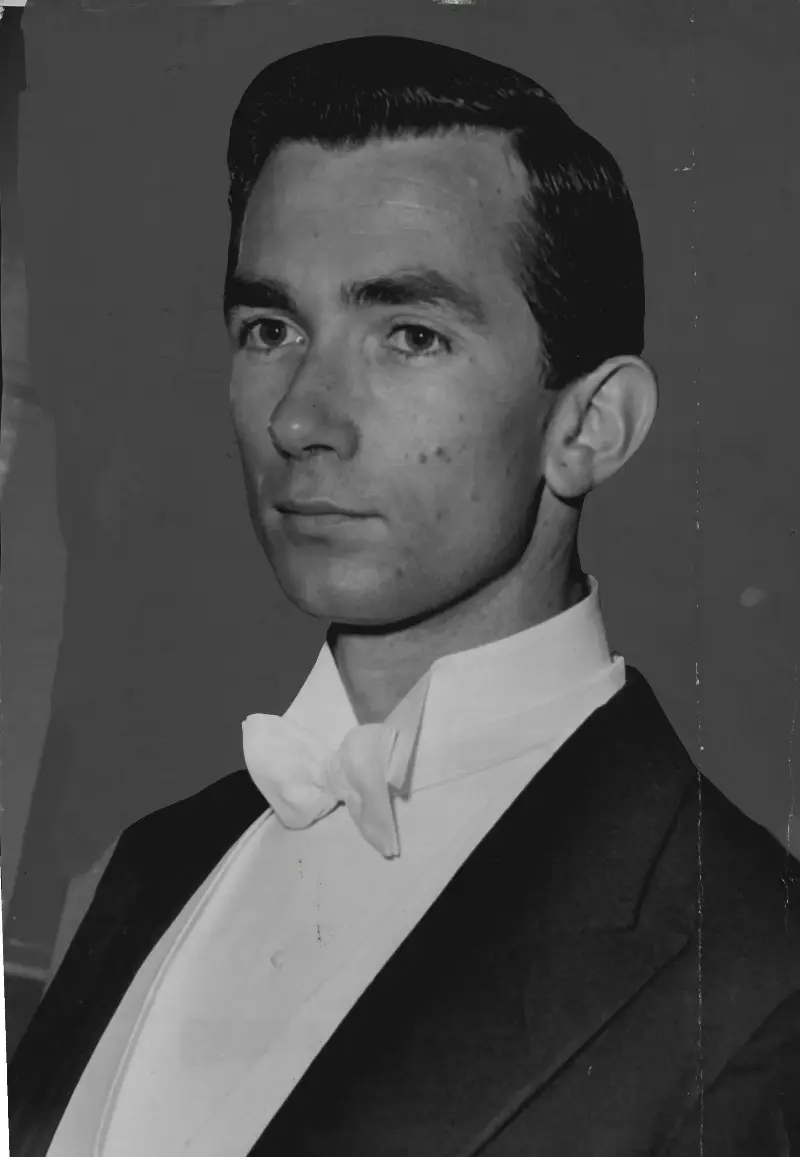
Geoffrey William Chard was born in Sydney on August 9 1930 and was raised in the city’s southern suburbs. At Canterbury Boys’ High School he was a contemporary of the pianist Geoffrey Parsons, who accompanied his first public appearance as part of a choir in a Remembrance Day concert. At school he showed promise as a tennis player, but opted instead for music and in April 1950 featured in “Radio’s Greatest Broadcast”, a programme of auditions live from Sydney Town Hall.
He went on to perform with the Sydney Opera Group while juggling an accountancy course at business college, playing tennis and singing for community events with amateur musical societies. He even performed on the city’s showboats at weekends, giving a thrilling impersonation of Al Jolson, the self-styled “world’s greatest entertainer”.
Eugene Goossens heard him in Tosca at Rockdale Town Hall and suggested that his voice was suitable for a career in music, but the profession was too socially distant from his upbringing for him to make the leap immediately. Nevertheless, he turned down an offer to appear in a touring version of the operetta The Song of Norway, holding out for a more serious opportunity.
This came in 1951 with New South Wales Opera, where he covered for the baritone John Brownlee in a Saturday matinee performance of Don Giovanni in which he had to pour wine from a bottle into a glass, then throw the glass across the stage. “I was shaking so much with nerves that I kept on pouring until the glass was overflowing. When I finally threw it, the wine went everywhere,” he recalled.
The following year he sang seven Don Giovannis in a week, piling into trucks with other company members as they toured the state “with the Moree dust down our throats”. It was not the wisest thing to do, he later confessed with a grin. “But we survived. We thought singing opera was a short life but a happy one, and we wanted to be in it.”
Meanwhile he continued with the day job as a company secretary, which he disliked profoundly, and in 1956 appeared in the Elizabethan Trust Opera Company’s inaugural production, The Marriage of Figaro. Around the same time he married Marjorie Conley, a dramatic soprano. She won the Mobil Quest award in 1959 and set off on a tour of Queensland, but died suddenly from a brain haemorrhage while the family were in Surfers Paradise, leaving him to raise their young son, David, alone.
Chard returned to live with his elderly parents and sold his marital home, spending the proceeds on a visit to London in 1960, at a time when several Australians were joining Sadler’s Wells Opera. He found an agent and in August 1961 launched his professional career with appearances on BBC Television’s The Singing Years with Eric Robinson and in the role of Count di Luna in Welsh National Opera’s summer touring production of Verdi’s Il trovatore.
The following year he gathered his belongings and son and, arriving in London during the big freeze of 1962-63, began a new life in Britain. Father and son moved from digs to digs, eventually settling in Harrow with a recently widowed elderly landlady who was willing to care for David. At first work was hard to come by. Auditions did not go well, recording contracts were cancelled and Sadler’s Wells told him to forget about a career in opera and go home to Australia. “All it did was reinforce my determination to prove them wrong,” he told the Sydney Morning Herald in 1984.
For a time he sang operatic arias on trans-Atlantic cruise liners, refusing to make the switch to popular music. Gradually, however, opera opportunities began to come his way and, according to a Telegraph critic, he made “a more than promising impression” as Agamemnon in Gluck’s Iphigenia in Aulis with Philopera at St Pancras Town Hall in March 1964. He went on to appear with Welsh National Opera, at the Royal Opera House and with Glyndebourne, earning warm reviews in the title role of Don Giovanni on the company’s pre-season tour in 1968. Then came the backing of the Australian conductor Charles Mackerras, who eased his entry into the previously reluctant Sadler’s Wells Opera.
By the mid-1980s Chard was appearing more often in his homeland, including as Scarpia in Puccini’s Tosca and Nick Shadows in Stravinsky’s The Rake’s Progress for Opera Australia, the successor to the Elizabethan Trust Opera Company. Eventually he called time on his London career and returned permanently to Sydney, settling in the suburb of Hunter’s Hill. He continued to sing while teaching at the Sydney Conservatorium of Music, his final public appearances including performances of Mendelssohn’s Elijah.
Chard, who in 1988 was appointed a Member of the Order of Australia, was president of Hunter’s Hill Music and enjoyed golf and tennis, although a car accident in 2000, in which he fractured his neck and back, left him with limited mobility.
He married secondly, in 1972, Margaret Ficken.
Geoffrey Chard, born August 9 1930, death announced October 7 2026